

Hair loss has become a major concern for people of all age groups, regardless of gender. Everyday stress, poor lifestyle habits, pollution, hormonal imbalance, and nutritional deficiencies are some of the biggest reasons behind excessive hair fall. While many people rely on shampoos, hair oils, and salon treatments, very few realize that true hair health starts from inside the body. What you eat daily directly affects the strength, thickness, and growth of your hair.
Vitamin-rich foods play a critical role in reducing hair loss naturally and improving overall scalp health. When your body lacks essential vitamins, hair follicles weaken, leading to thinning hair, breakage, dullness, and slow growth. Including the right vitamin foods in your daily meals can help nourish hair roots, activate dormant follicles, and support long-term hair growth without harsh chemicals or expensive treatments.
One of the most important vitamins for hair health is vitamin A, which helps the scalp produce natural oils that keep hair moisturized. A dry scalp often leads to itching, dandruff, and increased hair fall. Vitamin A also supports healthy cell growth, which is essential for strong hair strands. However, balance is important because excessive vitamin A can also trigger hair loss.
Carrots are one of the best natural sources of vitamin A and can be easily added to daily meals. A simple carrot and ginger soup made with minimal spices not only supports hair health but also improves digestion. Sweet potatoes are another excellent option and can be roasted with olive oil for a healthy side dish. Spinach blended into smoothies or lightly sautéed with garlic provides vitamin A along with iron, which further strengthens hair roots.
Vitamin B complex is another essential group of nutrients that help reduce hair fall and improve hair texture. Biotin, also known as vitamin B7, is particularly important because it strengthens the hair shaft and reduces breakage. Other B vitamins improve oxygen supply to hair follicles and help produce new hair cells, leading to thicker and healthier hair growth over time.
Eggs are one of the most powerful vitamin B-rich foods for hair growth and can be used in many simple recipes. A soft scrambled egg with vegetables makes a nutrient-dense breakfast. Whole grains like oats can be cooked into porridge and topped with nuts and seeds for added hair benefits. Yogurt combined with fruits makes a healthy snack that supports both scalp and digestive health, which is important for nutrient absorption.
Vitamin C plays a vital role in protecting hair follicles from damage caused by free radicals and environmental stress. It also helps the body absorb iron more effectively, which is crucial for preventing hair thinning. Without enough vitamin C, hair becomes weak, dry, and prone to breakage, even if other nutrients are present in the diet.
Citrus fruits like oranges and lemons can be consumed fresh or added to warm water in the morning to support scalp circulation. A simple fruit salad made with strawberries, kiwi, and oranges provides a powerful vitamin C boost. Adding bell peppers to stir-fried vegetables or salads is another easy way to increase vitamin C intake while enhancing flavor and texture.
Vitamin D deficiency is strongly linked to hair thinning and hair loss issues. This vitamin helps activate hair follicles and supports the growth phase of the hair cycle. When vitamin D levels are low, hair follicles remain inactive, leading to increased hair shedding and slower regrowth, especially during seasonal changes.
Fatty fish like salmon can be lightly grilled or pan-cooked with herbs to make a delicious hair-friendly meal. Egg yolks added to omelets help support vitamin D intake naturally. Mushrooms cooked with onions and spices make an excellent vegetarian option for scalp nourishment. Spending some time in natural sunlight also helps improve vitamin D levels naturally.
Vitamin E is known for improving blood circulation to the scalp and protecting hair cells from oxidative stress. Better circulation means hair follicles receive more oxygen and nutrients, resulting in stronger roots and improved hair density. Vitamin E also helps repair damaged hair and improves shine and softness.
Almonds soaked overnight and consumed in the morning support scalp health and hair strength. A simple avocado smoothie with milk or plant-based alternatives helps improve hair moisture from within. Using olive oil in cooking not only enhances taste but also supports vitamin E intake, which benefits both hair and skin health.
Iron and zinc work closely with vitamins to prevent hair loss and support hair regeneration. Iron deficiency is one of the most common causes of hair fall, particularly in women. Zinc helps repair hair tissue and supports oil gland function around hair follicles, reducing scalp dryness and breakage.
Lentils cooked into soups or dals provide iron and plant-based protein that strengthen hair roots. Pumpkin seeds can be lightly roasted and added to salads or snacks to improve zinc intake. Lean meats and beans also help maintain healthy hair growth when included regularly in balanced meals.
Protein is essential because hair is primarily made of keratin, a protein structure. Without enough protein, hair becomes weak, thin, and prone to shedding. Vitamin-rich protein foods support hair strength, improve thickness, and reduce breakage over time.
Greek yogurt mixed with fruits and seeds makes a protein-rich snack that supports hair growth. Chickpea curry or hummus provides plant-based protein along with essential vitamins. Fish and lean meats consumed in moderation help repair damaged hair follicles and promote faster regrowth.
Hydration plays a crucial role in hair health and vitamin absorption. Without enough water, the body struggles to deliver nutrients to hair follicles effectively. Dehydration often leads to dry scalp, brittle hair, and increased hair fall, even if the diet is rich in vitamins.
Drinking enough water throughout the day supports scalp moisture and nutrient transport. Coconut water helps restore electrolytes and supports hair hydration. Fruits like watermelon and cucumber provide hydration along with vitamins that nourish hair from within.
Simple daily habits can significantly improve the effectiveness of vitamin foods for hair loss. Eating fresh, whole foods instead of processed meals helps improve nutrient absorption. Cooking methods like steaming, boiling, or light sautéing preserve vitamins better than deep frying.
Managing stress through adequate sleep and light physical activity supports better nutrient utilization. Avoiding excessive sugar and junk food helps prevent inflammation that weakens hair follicles. Consistency is key, as natural hair improvement takes time and regular nourishment.
Healthy hair is a reflection of overall wellness, balanced nutrition, and mindful living. By focusing on vitamin-rich foods, simple recipes, and healthy daily habits, you can reduce hair loss naturally and support long-term hair growth. Nourishing your body from within is the most sustainable and effective way to achieve strong, shiny, and healthy hair.
Healthy, strong hair doesn’t just depend on what you apply — it starts with what you eat. If you’re experiencing hair fall, thinning, or weak strands, your body might be missing essential nutrients. The good news? You can nourish your hair naturally with the right vitamin-rich foods.
In this guide, you’ll discover key vitamins for hair growth and simple, delicious recipes you can easily include in your daily diet.
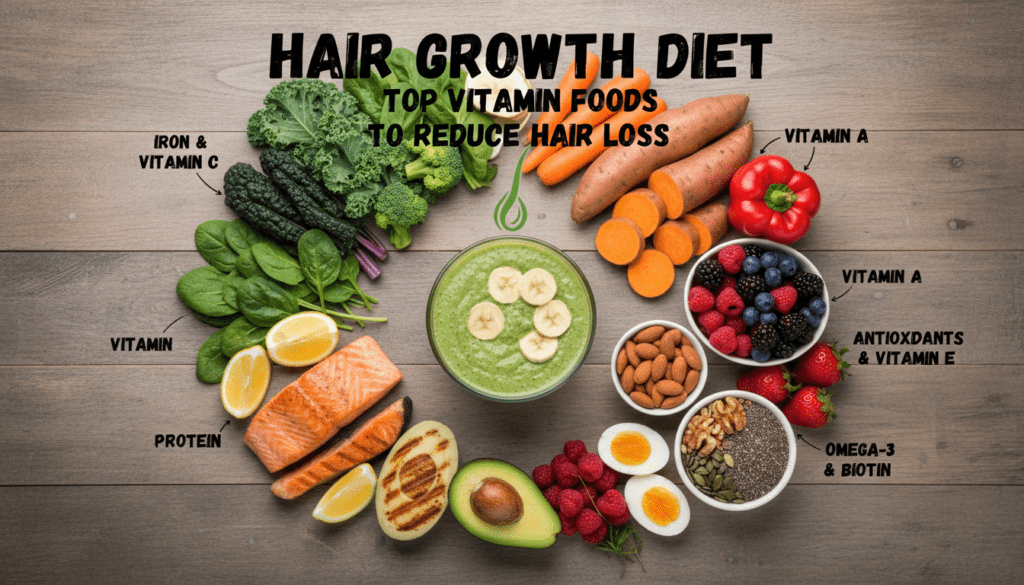
🌿 Essential Vitamins That Help Reduce Hair Loss
1️⃣ Vitamin A
Supports scalp health and helps produce sebum (natural oil).
Foods: Carrots, sweet potatoes, spinach.
2️⃣ B Vitamins (Especially Biotin – B7)
Strengthen hair strands and improve thickness.
Foods: Eggs, almonds, whole grains.
3️⃣ Vitamin C
Boosts collagen production and improves iron absorption.
Foods: Oranges, lemon, amla, guava.
4️⃣ Vitamin D
Helps activate hair follicles.
Sources: Sunlight, mushrooms, fortified dairy.
5️⃣ Vitamin E
Improves blood circulation to the scalp.
Foods: Sunflower seeds, almonds, spinach.
🥗 Recipe 1: Hair Growth Green Smoothie
A nutrient-packed smoothie rich in Vitamin A, C, E, and iron.
Ingredients:
- 1 cup fresh spinach
- 1 small carrot (chopped)
- 1 orange (peeled)
- 5 soaked almonds
- 1 tsp chia seeds
- 1 cup coconut water
Instructions:
- Add all ingredients to a blender.
- Blend until smooth.
- Serve fresh in the morning for maximum benefits.
💡 Why it works: This smoothie boosts collagen, improves scalp circulation, and strengthens hair roots.
🍳 Recipe 2: Protein & Biotin Power Breakfast Bowl
A perfect morning meal to reduce hair fall.
Ingredients:
- 2 boiled eggs
- ½ cup sautéed mushrooms
- 1 slice whole grain toast
- 1 tbsp sunflower seeds
- A squeeze of lemon
Instructions:
- Slice boiled eggs and place on toast.
- Add sautéed mushrooms.
- Sprinkle sunflower seeds and lemon juice.
- Serve warm.
💡 Why it works: Packed with biotin, Vitamin D, and protein — essential for stronger hair strands.
🌞 Bonus Tips for Healthier Hair
- Stay hydrated daily.
- Include protein in every meal.
- Avoid crash diets.
- Get 15–20 minutes of sunlight exposure.
- Reduce processed sugar intake.
📝 Final Thoughts
Hair growth takes time, but consistency is key. By including vitamin-rich foods in your daily meals, you nourish your hair from within. Instead of relying only on external treatments, build a strong foundation through a balanced diet. Eat smart. Stay consistent. Let your hair shine naturally. ✨
- Quick and Easy Air Fryer Recipes You Can Make in Minutes
- 25+ Easy Chicken Recipes, Air Fryer Recipes & Easy Dinner Ideas
- Chicken Recipes, Air Fryer Recipes & Easy Dinner Ideas for Busy Weeknights
- Healthy Food Restaurants Near Me & Healthy Food Delivery Right Now
- Weight Loss Diet: A Simple and Healthy 7-Day Meal Plan