
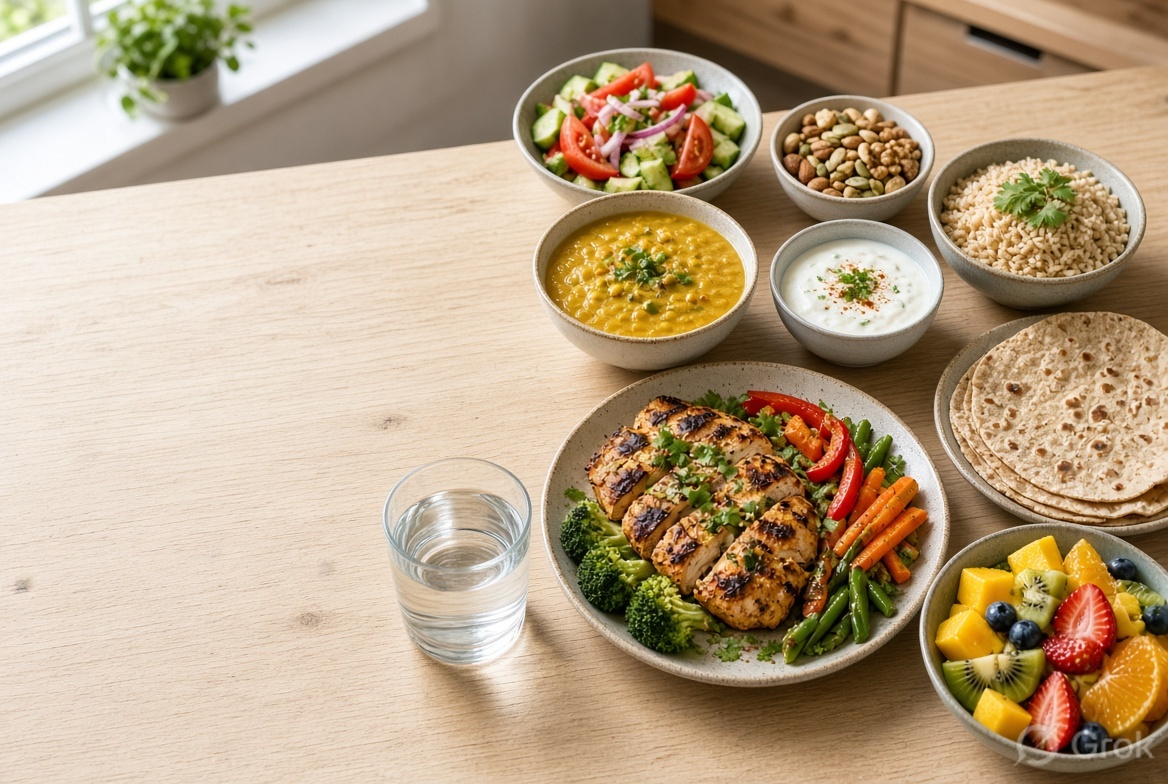
Losing weight does not have to mean starving yourself, skipping meals, or giving up all your favorite foods. A good weight loss diet is about creating healthy eating habits that you can continue for the long term.
The most effective approach combines nutritious foods, sensible portions, regular physical activity, adequate sleep, and consistency. Rather than following an extremely restrictive diet for a few weeks, focus on meals that are filling, satisfying, nutritious, and easy to prepare.
A healthy eating pattern can include vegetables, fruits, whole grains, protein-rich foods, beans, lentils, nuts, seeds, and moderate amounts of healthy fats.
If you are looking for a simple diet for weight loss, this guide provides practical meal ideas, portion-control tips, healthy snack options, and a sample 7-day weight loss meal plan that you can easily adapt to your preferences.
What Is a Weight Loss Diet?
A weight loss diet is an eating pattern designed to help you consume an appropriate amount of calories while providing the nutrients your body needs.
This does not mean eating as little as possible.
The goal is to choose nutritious foods that help you feel satisfied while keeping your overall calorie intake appropriate for your individual needs.
Your calorie requirements depend on several factors, including your age, sex, body size, activity level, and overall health. Therefore, there is no single calorie target that works for everyone.
A sustainable weight loss plan should also fit your lifestyle, food preferences, culture, budget, and daily schedule.
How Does Weight Loss Actually Happen?
Your body uses energy throughout the day for basic functions, movement, digestion, and physical activity.
When you consistently consume more calories than your body uses, the excess energy can contribute to weight gain. When you consume fewer calories than your body uses, your body can use stored energy, which can lead to weight loss.
However, weight loss is not always perfectly linear.
Your weight can change from day to day because of water retention, digestion, hormones, sodium intake, and other factors. For this reason, it is better to look at your progress over several weeks rather than becoming discouraged by a single number on the scale.
Gradual and steady weight loss is generally more sustainable than trying to lose weight extremely quickly.
What Should You Eat on a Weight Loss Diet?
A healthy weight loss meal does not need to be complicated.
Try building most of your meals around vegetables, protein-rich foods, whole grains, fruits, and moderate amounts of healthy fats.
1. Vegetables
Vegetables are an excellent choice because they provide fiber, vitamins, minerals, and plenty of volume.
Try including:
- Spinach
- Broccoli
- Cauliflower
- Carrots
- Cabbage
- Green beans
- Bell peppers
- Tomatoes
- Cucumber
- Bottle gourd
- Bitter gourd
- Pumpkin
- Okra
- Mushrooms
- Leafy greens
Try to include different types and colors of vegetables throughout the week.
2. Protein-Rich Foods
Protein is an important part of a balanced diet and can help make meals more satisfying.
Good choices include:
- Eggs
- Chicken
- Fish
- Plain curd
- Greek yogurt
- Paneer
- Tofu
- Soybeans
- Dal
- Chickpeas
- Kidney beans
- Black beans
- Lentils
- Peas
- Nuts and seeds
Vegetarians can get protein from lentils, beans, soy products, dairy products, eggs, nuts, and seeds.
3. Whole Grains and Healthy Carbohydrates
Carbohydrates do not automatically cause weight gain.
Instead of eliminating carbohydrates completely, focus on nutritious sources and sensible portions.
Good options include:
- Oats
- Brown rice
- Whole-wheat roti
- Whole-grain bread
- Quinoa
- Barley
- Millets
- Sweet potatoes
- Corn
- Other whole grains
The overall balance of your meal and the amount you eat are often more important than completely avoiding carbohydrates.
4. Fruits
Whole fruits can be a nutritious part of a weight loss diet.
Good choices include:
- Apples
- Oranges
- Guava
- Papaya
- Watermelon
- Berries
- Pears
- Kiwi
- Bananas
- Mangoes
You do not need to eliminate fruit simply because it contains natural sugar.
Whole fruit also provides fiber, vitamins, minerals, and other beneficial nutrients.
5. Healthy Fats
Healthy fats can be part of a balanced diet, but remember that fats are calorie-dense, so portion sizes matter.
Good options include:
- Almonds
- Walnuts
- Peanuts
- Chia seeds
- Flaxseeds
- Pumpkin seeds
- Sesame seeds
- Avocado
- Olive oil
- Other unsaturated vegetable oils
The Simple Weight Loss Plate Method
One of the easiest ways to create a balanced meal is to think about your plate rather than counting every calorie.
As a general approach, make a substantial portion of your meal vegetables, include a good source of protein, and add a sensible portion of whole grains or another carbohydrate source.
For example:
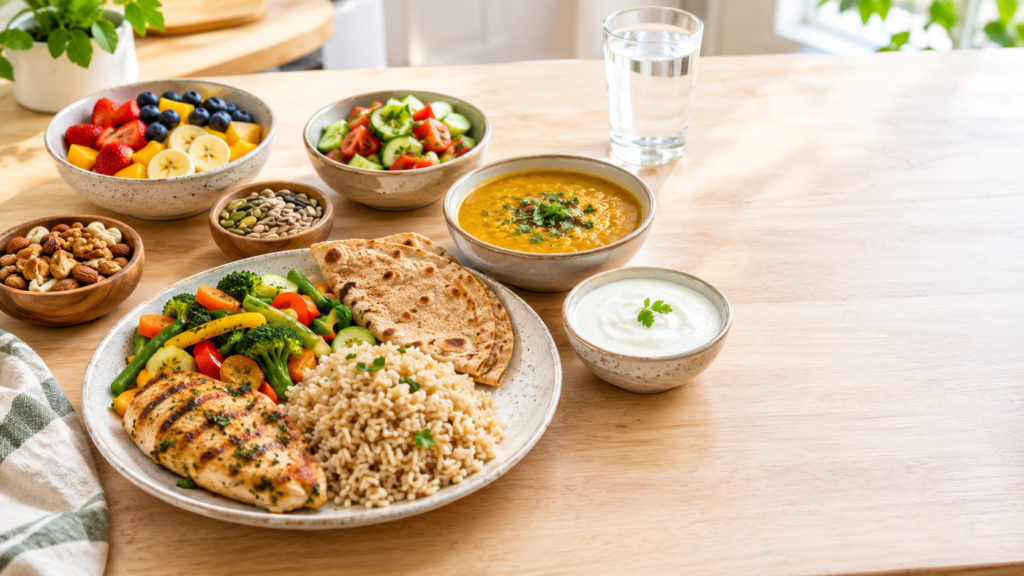
A lunch could include dal, mixed vegetable sabzi, salad, plain curd, and one or two small whole-wheat rotis.
Another option could be grilled chicken, sautéed vegetables, a moderate serving of brown rice, and salad.
For a vegetarian meal, try chickpea salad with vegetable soup and a small whole-wheat roti.
The exact portions should be adjusted according to your individual calorie and nutritional needs.
7-Day Weight Loss Diet Plan
Here is a simple sample 7-day weight loss meal plan. Portions can be adjusted according to your individual needs, activity level, hunger, and dietary preferences.
Day 1
Breakfast
Vegetable oats or oatmeal with a boiled egg or plain yogurt.
Mid-Morning Snack
One whole fruit such as an apple or guava.
Lunch
Two small whole-wheat rotis with dal, mixed vegetable sabzi, cucumber salad, and plain curd.
Evening Snack
A small handful of roasted chickpeas or nuts.
Dinner
Grilled or baked chicken or fish with a large serving of vegetables.
Vegetarian option: Replace chicken or fish with tofu, paneer, or a bean-based dish.
Day 2
Breakfast
Vegetable poha with peanuts and a side of plain yogurt.
Mid-Morning Snack
Papaya or an orange.
Lunch
Brown rice with rajma or chickpea curry, vegetable salad, and curd.
Evening Snack
Green tea or another unsweetened beverage with roasted makhana.
Dinner
Vegetable soup with grilled paneer or tofu and a side salad.
Day 3
Breakfast
Two eggs with whole-grain toast and tomatoes.
Vegetarian option: Tofu bhurji with whole-wheat toast.
Mid-Morning Snack
One whole fruit.
Lunch
Two small rotis with chicken or fish curry, vegetables, and salad.
Vegetarian option: Dal or soy-based curry.
Evening Snack
Plain yogurt with a small serving of fruit.
Dinner
Moong dal khichdi with plenty of vegetables and a side of curd.
Day 4
Breakfast
Vegetable upma with a boiled egg or plain yogurt.
Mid-Morning Snack
Guava, apple, or another whole fruit.
Lunch
Quinoa or brown rice bowl with chickpeas, cucumber, tomato, leafy greens, and curd.
Evening Snack
A small handful of almonds or walnuts.
Dinner
Vegetable stir-fry with tofu or chicken.
Day 5
Breakfast
Oats topped with fruit, chia seeds, and plain yogurt.
Mid-Morning Snack
An orange or small serving of papaya.
Lunch
Two small rotis with dal, spinach or another leafy vegetable, mixed vegetable sabzi, and salad.
Evening Snack
Roasted chickpeas or makhana.
Dinner
Grilled fish with vegetables.
Vegetarian option: Grilled paneer or tofu with vegetables.
Day 6
Breakfast
Vegetable omelet with whole-grain toast.
Vegetarian option: Moong dal chilla with vegetable filling.
Mid-Morning Snack
One whole fruit.
Lunch
Vegetable pulao made with a moderate amount of rice, served with dal and salad.
Evening Snack
Plain yogurt with cinnamon or fruit.
Dinner
Lentil soup with roasted vegetables and a small whole-wheat roti.
Day 7
Breakfast
Idli with sambar and a vegetable side.
Mid-Morning Snack
Fruit of your choice.
Lunch
Chicken or fish with brown rice, vegetables, and salad.
Vegetarian option: Rajma, chana, tofu, or dal.
Evening Snack
A small serving of nuts or roasted chickpeas.
Dinner
Light vegetable soup with a protein source such as tofu, paneer, eggs, chicken, fish, or beans.
Healthy Breakfast Ideas for Weight Loss
Breakfast does not have to be complicated.
Some healthy breakfast ideas include:
- Vegetable omelet with whole-grain toast
- Oatmeal with fruit and nuts
- Vegetable poha
- Vegetable upma
- Moong dal chilla
- Idli with vegetable-rich sambar
- Plain yogurt with fruit and seeds
- Overnight oats
- Tofu bhurji with whole-wheat toast
- Besan chilla with vegetables
Try to include a combination of protein, fiber, and nutritious carbohydrates in your breakfast.
Healthy Lunch Ideas
Lunch can be simple, nutritious, and satisfying.
Try these combinations:
- Dal + roti + vegetables + salad
- Rajma + brown rice + cucumber salad
- Chickpea salad + yogurt + whole-grain roti
- Chicken + vegetables + brown rice
- Fish + vegetables + roti
- Paneer or tofu + vegetables + roti
- Vegetable khichdi + curd
- Quinoa and chickpea bowl
- Lentil soup + whole-grain toast
- Homemade vegetable pulao + dal
The goal is not to make every meal perfect. The goal is to develop healthy eating habits that you can maintain consistently.
Healthy Dinner Ideas for Weight Loss
Many people find dinner challenging because they are tired or busy after a long day.
Keeping a few easy recipes available can make healthy eating much easier.
Try:
- Vegetable soup with grilled chicken
- Dal and vegetable soup
- Tofu and vegetable stir-fry
- Grilled fish with salad
- Paneer and vegetable bowl
- Moong dal khichdi with vegetables
- Egg bhurji with vegetables and roti
- Chickpea salad with yogurt
- Chicken vegetable soup
- Mixed vegetable curry with dal
If you prefer rice at dinner, you do not necessarily need to eliminate it. Choose a sensible portion and pair it with vegetables and a protein source.
Healthy Snacks for Weight Loss
Snacking is not automatically bad.
The problem often comes from snacks that are very high in calories but do not provide much nutritional value or satisfaction.
Instead of regularly reaching for chips, cookies, sweets, or sugary drinks, try:
- Fresh fruit
- Plain yogurt
- Roasted chickpeas
- Makhana
- A small serving of nuts
- Carrot and cucumber sticks
- Boiled eggs
- Hummus with vegetables
- Homemade popcorn with minimal added fat
- Fruit with plain yogurt
Keep portions reasonable, especially with nuts, seeds, and nut butters, because these foods are nutritious but calorie-dense.
Foods to Eat More Often
A healthy weight loss diet can include a wide variety of foods.
Try to regularly include:
- Vegetables
- Whole fruits
- Lentils
- Beans
- Eggs
- Fish
- Lean meats
- Tofu
- Plain dairy products
- Whole grains
- Nuts and seeds
- Water and unsweetened beverages
Foods to Limit
You do not necessarily need to completely ban any particular food.
However, foods and drinks that are very high in added sugar, calories, saturated fat, or sodium can make it harder to maintain a calorie deficit when consumed frequently.
Consider limiting:
- Sugary soft drinks
- Sweetened tea and coffee
- Large amounts of fruit juice
- Candy
- Cakes
- Cookies
- Deep-fried foods
- Highly processed snacks
- Large portions of fast food
- Sugary desserts
- Excessive alcohol
Instead of thinking about certain foods as completely “bad,” focus on how often you eat them and how much you consume.
Do You Have to Give Up Rice or Roti to Lose Weight?
No.
Rice and roti can both be part of a healthy weight loss diet.
The more important factors are your overall calorie intake, portion sizes, preparation methods, and what you eat with them.
For example, a meal containing a reasonable portion of rice, dal, vegetables, and salad can be well balanced.
Likewise, whole-wheat roti can fit into a weight loss meal when paired with vegetables and a protein source.
Instead of asking, “Can I eat rice?” ask:
“How much rice should I eat, and what else should I include in the meal?”
Can You Eat Snacks and Still Lose Weight?
Yes.
A weight loss diet does not mean that you can never eat snacks.
Planning nutritious snacks can help some people manage hunger between meals.
The key is to distinguish between a planned snack and continuous grazing throughout the day.
For example, choose one serving of fruit and yogurt rather than repeatedly eating snacks directly from a large package.
Portion control is important because even nutritious foods contain calories.
How Much Water Should You Drink?
Water is an important part of a healthy lifestyle.
Choose water regularly throughout the day and consider replacing sugary beverages with water or other unsweetened drinks.
However, there is no need to force yourself to drink excessive amounts of water for weight loss.
Your hydration needs can vary depending on factors such as weather, activity level, diet, and health.
Exercise and Weight Loss
Diet is important, but physical activity can also support weight management and overall health.
For healthy adults, general guidelines recommend at least 150 minutes of moderate-intensity aerobic activity each week, along with muscle-strengthening activities on at least two days per week.
You do not have to begin with an intense workout program.
If you are currently inactive, start with manageable activities such as:
- Walking
- Cycling
- Dancing
- Swimming
- Light jogging
- Home workouts
- Strength exercises
- Yoga
Start gradually and increase your activity as your fitness improves.
Why Protein Matters During Weight Loss
Protein is an important part of a balanced diet.
Include a source of protein in your meals, such as:
- Eggs
- Fish
- Chicken
- Yogurt
- Paneer
- Tofu
- Dal
- Lentils
- Chickpeas
- Beans
- Soybeans
- Nuts and seeds
The right amount of protein varies from person to person.
If you have kidney disease or another medical condition requiring dietary restrictions, speak with a qualified healthcare professional before making major changes to your protein intake.
Fiber and Weight Loss
Fiber-rich foods can be useful in a weight loss diet because they can add volume and texture to meals.
Good sources include:
- Vegetables
- Fruits
- Beans
- Lentils
- Chickpeas
- Oats
- Whole grains
- Seeds
- Nuts
Instead of relying on supplements, start by adding more naturally fiber-rich foods to your meals.
For example, add vegetables to breakfast, choose whole fruit instead of juice, include lentils in soups and curries, and serve salads with lunch and dinner.
10 Simple Weight Loss Habits
You do not need to completely change your lifestyle overnight.
Start with a few habits and build from there.
- Eat more vegetables.
- Include protein with meals.
- Choose whole fruit more often than juice.
- Drink fewer sugary beverages.
- Watch portion sizes.
- Cook more meals at home.
- Eat slowly and pay attention to hunger and fullness.
- Walk or exercise regularly.
- Get adequate sleep.
- Focus on consistency rather than perfection.
Healthy weight management involves more than food alone. Sleep, stress, physical activity, and other lifestyle factors can also affect weight management.
Common Weight Loss Mistakes to Avoid
1. Eating Too Little
Extreme calorie restriction can leave you hungry, tired, and unable to maintain your diet.
A sustainable plan should provide enough food and nutrients for your individual needs.
2. Skipping Meals to Save Calories
Some people skip breakfast or lunch and then become extremely hungry later in the day.
If skipping a meal works for you and you are still meeting your nutritional needs, it can be part of your eating pattern. However, you do not need to skip meals to lose weight.
3. Drinking Too Many Calories
Sweetened coffee, soft drinks, milkshakes, energy drinks, and large amounts of juice can add significant calories without providing the same satisfaction as a balanced meal.
4. Eliminating Entire Food Groups
Cutting out carbohydrates or another entire food group is not automatically necessary for weight loss.
A balanced eating pattern can include carbohydrates, protein, healthy fats, fruits, vegetables, and whole grains.
5. Depending on Weight Loss Products
Fat burners, detox drinks, teas, and miracle supplements are not substitutes for a healthy eating pattern and active lifestyle.
Be particularly cautious of products that promise dramatic weight loss without requiring changes to your eating habits or physical activity.
6. Expecting Results Overnight
Weight loss takes time.
Trying to lose weight extremely quickly can make it difficult to maintain your results.
Focus on gradual progress and sustainable habits.
What About Cheat Meals?
You do not need a “cheat day” to lose weight.
Instead, think about flexibility.
If you enjoy pizza, biryani, dessert, or another favorite food, you can occasionally include it in your overall eating pattern.
The important factors are portion size and frequency.
One restaurant meal does not ruin your progress, just as one healthy meal does not create instant weight loss.
If you overeat at one meal, do not respond by starving yourself the next day. Simply return to your normal eating routine.
How to Make Weight Loss Meals More Filling
If you often feel hungry while dieting, try changing the composition of your meals rather than simply eating less.
For example:
Instead of a small bowl of plain cereal, try oatmeal with fruit, yogurt, and a small amount of nuts.
Instead of a large serving of white rice by itself, try a moderate serving of rice with dal, vegetables, salad, and curd.
Instead of biscuits with sweet tea, try unsweetened tea with fruit and yogurt or a small serving of roasted chickpeas.
The goal is to create meals that provide protein, fiber, volume, and flavor.
Meal Preparation Tips for Weight Loss
Healthy eating becomes much easier when nutritious ingredients are already available.
Try preparing a few ingredients ahead of time:
- Wash and chop vegetables.
- Cook a batch of dal.
- Boil eggs.
- Prepare beans or chickpeas.
- Cook a moderate amount of whole grains.
- Keep washed fruit visible.
- Portion nuts into small containers.
- Prepare homemade yogurt-based dips.
- Keep healthy frozen vegetables available.
- Make simple soups for busy evenings.
You do not need to prepare every meal days in advance.
Even a small amount of preparation can make it easier to avoid last-minute unhealthy food choices.
A Simple Weight Loss Grocery List
For your next grocery trip, consider buying the following foods.
Vegetables
- Spinach
- Carrots
- Tomatoes
- Cucumber
- Broccoli
- Cauliflower
- Bell peppers
- Cabbage
- Green beans
- Bottle gourd
- Pumpkin
Fruits
- Apples
- Oranges
- Guava
- Papaya
- Bananas
- Berries
- Watermelon
Protein Foods
- Eggs
- Chicken
- Fish
- Plain yogurt
- Paneer
- Tofu
- Dal
- Lentils
- Chickpeas
- Rajma
Whole Grains
- Oats
- Brown rice
- Whole-wheat flour
- Quinoa
- Barley
- Millets
- Whole-grain bread
Healthy Fats
- Almonds
- Walnuts
- Peanuts
- Chia seeds
- Flaxseeds
- Pumpkin seeds
- Sesame seeds
- Healthy cooking oils
Having these ingredients available makes it easier to prepare balanced meals at home.
Frequently Asked Questions About Weight Loss Diets
What is the best diet for weight loss?
There is no single diet that is best for everyone.
A good weight loss diet should provide adequate nutrition, create an appropriate calorie deficit, fit your food preferences and lifestyle, and be sustainable enough to follow over time.
Can I lose weight without exercising?
Dietary changes can contribute to weight loss, but physical activity provides important health benefits and can support weight management and maintaining weight loss.
Can I eat rice while trying to lose weight?
Yes. Rice can be included in a weight loss diet. Pay attention to portion size and combine rice with vegetables and a protein-rich food.
Can I eat roti during weight loss?
Yes. Whole-wheat roti can be part of a balanced meal. Pair it with vegetables and a protein source such as dal, beans, eggs, chicken, fish, tofu, or paneer.
Is fruit good for weight loss?
Whole fruit can be part of a healthy weight loss diet. Whole fruits provide fiber and nutrients and can be a better choice than regularly consuming large amounts of fruit juice.
Should I stop eating carbohydrates?
Not necessarily. Carbohydrates can be part of a healthy eating pattern. Choose nutritious carbohydrate sources and pay attention to portion sizes.
How quickly can I lose weight?
Weight loss varies considerably from person to person. Gradual, steady weight loss is generally considered more sustainable than rapid weight loss.
Can I have dessert while losing weight?
Yes. Occasional treats can fit into an overall healthy eating pattern. The key is moderation and portion size.
Is skipping dinner good for weight loss?
Skipping dinner is not necessary for weight loss. What matters more is your overall dietary pattern and calorie intake. If skipping dinner causes excessive hunger or overeating later, it may not be a useful strategy for you.
Final Thoughts
The best weight loss diet is not the one that promises the fastest results. It is the one you can realistically follow for months and years.
Build your meals around vegetables, fruits, protein-rich foods, whole grains, and sensible portions of healthy fats. Drink mostly water or other unsweetened beverages, limit highly processed and sugary foods, and stay physically active.
Most importantly, do not expect perfection.
You may have a restaurant meal. You may eat dessert. You may miss a workout. These things do not mean your diet has failed.
Simply return to your healthy routine at the next meal.
A sustainable approach to weight loss is about creating habits that support your health rather than following a short-term diet that you cannot maintain.
Start small, choose foods you enjoy, cook more often at home, and focus on progress rather than perfection.
Important Note
This article is intended for general educational purposes and is not a substitute for individualized medical or nutritional advice. Calorie and nutritional needs differ from person to person.
People who are pregnant or breastfeeding, under 18, have an eating disorder, have diabetes, kidney disease, heart disease, another medical condition, or take medications affected by diet or weight should speak with a qualified healthcare professional before making significant dietary changes.
A healthcare professional or registered dietitian can help create a meal plan appropriate for your individual needs.